
Sculpture Process
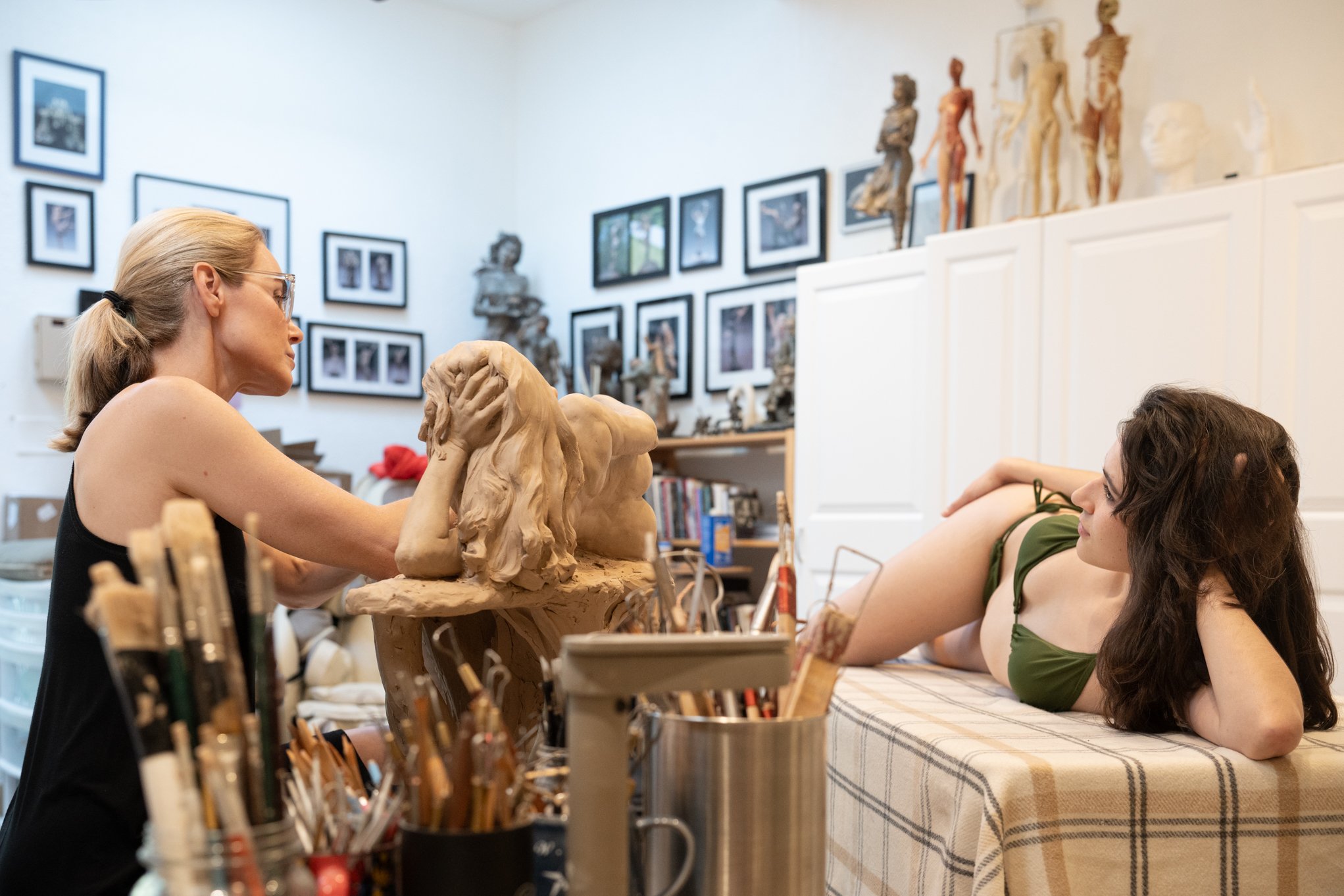
The Model
A model is chosen who embodies the feeling that I want my composition to convey.
Whenever possible, I work with a live model.
If the model is not available when sculpting, photographs from a multitude of angles and detailed measurements, taken with both calipers and measuring tape, are used.
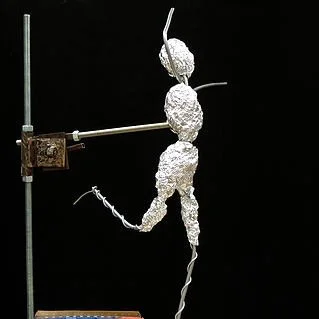
Building the Armature
An armature is the skeletal support framework of the sculpture.
I'll often build armatures for smaller sculptures with aluminum wire, and use plumber's pipe or wood for larger sculptures.
Lightweight materials such as aluminum foil or Styrofoam are used to create the underlying volume masses of the sculpture.
Clay is then added, fully covering the form.
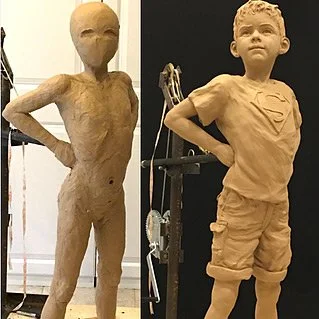
Sculpting in Clay
Anatomy and defining details are developed in the clay as I work toward a likeness to my model.
When sculpting the human figure, I always sculpt it nude first, and then clothe it to achieve realism and natural movement.
Making the Mold
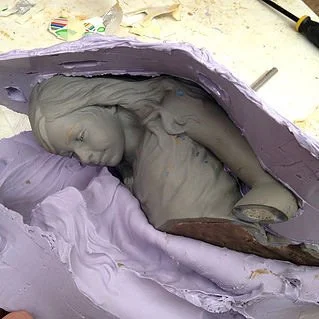
Once completed in clay, the sculpture is cut into sections for molding.
Liquid silicone is brushed on, coating the clay.
The silicone is allowed to dry before another coat is applied.
This process is repeated several times until the cured silicone is approximately one inch thick.
A mother mold is created to sheath the silicone mold, giving it both sturdiness and protection.
Mother molds may be made from a variety of materials including plaster, fiberglass, or plastic.
Wax
The mother mold is opened and the clay sculpture is removed.
After closing the mother mold again, hot wax is poured into the mold, coating all areas within.
Once cooled, the mold is opened and the wax replica sculpture (or sculpture parts) is released from the mold.
The Investment Process
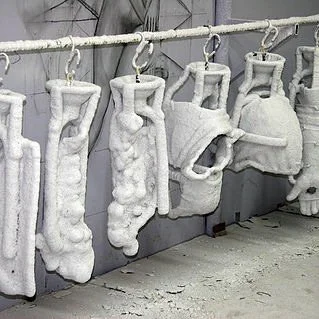
The wax sculpture is dipped into a tub with liquid plaster, then immersed immediately in a bin of powdered glass or ceramic.
The plaster-glass coated wax is hung to dry in a cool room.
This process is repeated 5 to 7 times and takes approximately two weeks.
Bronze Pouring
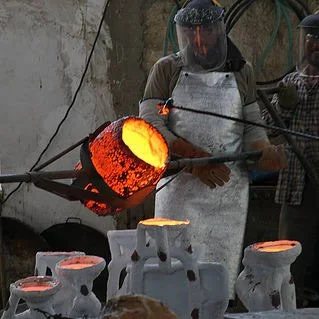
The plaster-glass shells are put in a large, blazing kiln, melting out the wax
The hot shells are removed from the kiln and set on the ground.
Bronze bricks are heated to melting point, and the molten bronze is poured into the shells and left to cool, solidify.
Metal Work
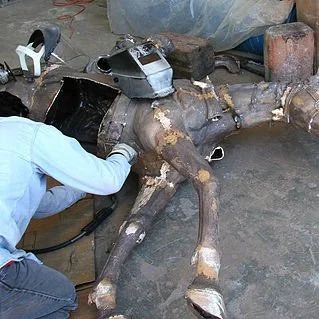
The shells are broken, chiseling them off the bronze.
The bronze parts are welded together and welding seams are ground away.
The completed sculpture is sandblasted for a clean and consistent metal finish.
Patina
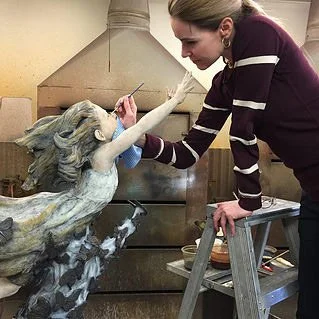
The bronze sculpture is heated with a torch and different acids are applied with a paintbrush or airbrush.
The chemicals react with the bronze creating coloration effects.
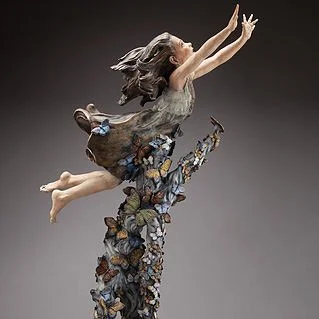
The Full Cycle
Taking a sculpture from conception to finished bronze is a process that requires time, patience, attention to quality and detail, and teamwork.
The full cycle entails its creation in clay, molding, casting in wax, bronze pouring and metal finishing, and patina.